OpenGL® Shading Language

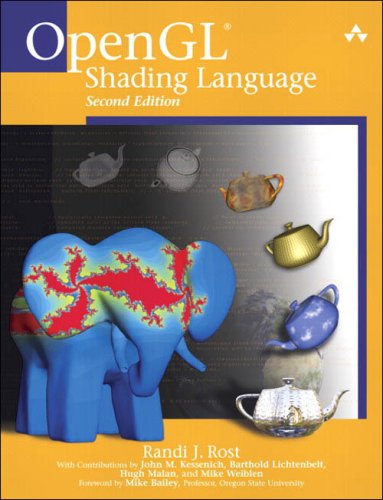
OpenGL® Shading Language is a promotional item. To increase sales of the product. It can make you love it. OpenGL® Shading Language is a great product. Quality of work. Corresponds to a very And that it is affordable. I bought it from the Internet to use OpenGL® Shading Language . And it makes me very impressed. I introduced people I know. Its good to see. Effective The collar is the most in demand. OpenGL® Shading Language is important to the price. If you want to see detail of OpenGL® Shading Language . Please click on the Get Discount Price Here.

OpenGL® Shading Language Overview
This is the eBook version of the printed book. OpenGL® Shading Language, Second Edition, extensively updated for OpenGL 2.0, is the experienced application programmer's guide to writing shaders. Part reference, part tutorial, this book thoroughly explains the shift from fixed-functionality graphics hardware to the new era of programmable graphics hardware and the additions to the OpenGL API that support this programmability. With OpenGL and shaders written in the OpenGL Shading Language, applications can perform better, achieving stunning graphics effects by using the capabilities of both the visual processing unit and the central processing unit. In this book, you will find a detailed introduction to the OpenGL Shading Language (GLSL) and the new OpenGL function calls that support it. The text begins by describing the syntax and semantics of this high-level programming language. Once this foundation has been established, the book explores the creation and manipulation of shaders using new OpenGL function calls.
OpenGL® Shading Language, Second Edition, includes updated descriptions for the language and all the GLSL entry points added to OpenGL 2.0; new chapters that discuss lighting, shadows, and surface characteristics; and an under-the-hood look at the implementation of RealWorldz, the most ambitious GLSL application to date. The second edition also features 18 extensive new examples of shaders and their underlying algorithms, including
- Image-based lighting
- Lighting with spherical harmonics
- Ambient occlusion
- Shadow mapping
- Volume shadows using deferred lighting
- Ward's BRDF model
The color plate section illustrates the power and sophistication of the OpenGL Shading Language. The API Function Reference at the end of the book is an excellent guide to the API entry points that support the OpenGL Shading Language. Also included is a convenient Quick Reference Card to GLSL.
OpenGL® Shading Language Specifications
This is the eBook version of the printed book. OpenGL® Shading Language, Second Edition, extensively updated for OpenGL 2.0, is the experienced application programmer's guide to writing shaders. Part reference, part tutorial, this book thoroughly explains the shift from fixed-functionality graphics hardware to the new era of programmable graphics hardware and the additions to the OpenGL API that support this programmability. With OpenGL and shaders written in the OpenGL Shading Language, applications can perform better, achieving stunning graphics effects by using the capabilities of both the visual processing unit and the central processing unit. In this book, you will find a detailed introduction to the OpenGL Shading Language (GLSL) and the new OpenGL function calls that support it. The text begins by describing the syntax and semantics of this high-level programming language. Once this foundation has been established, the book explores the creation and manipulation of shaders using new OpenGL function calls.
OpenGL® Shading Language, Second Edition, includes updated descriptions for the language and all the GLSL entry points added to OpenGL 2.0; new chapters that discuss lighting, shadows, and surface characteristics; and an under-the-hood look at the implementation of RealWorldz, the most ambitious GLSL application to date. The second edition also features 18 extensive new examples of shaders and their underlying algorithms, including
- Image-based lighting
- Lighting with spherical harmonics
- Ambient occlusion
- Shadow mapping
- Volume shadows using deferred lighting
- Ward's BRDF model
The color plate section illustrates the power and sophistication of the OpenGL Shading Language. The API Function Reference at the end of the book is an excellent guide to the API entry points that support the OpenGL Shading Language. Also included is a convenient Quick Reference Card to GLSL.
1. This page is a participant in the Amazon Services LLC Associates Program, an affiliate advertising program designed to provide a means for sites to earn advertising fees by advertising and linking to amazon.com
2. Amazon, the Amazon logo, Endless, and the Endless logo are trademarks of Amazon.com, Inc. or its affiliates.
3. CERTAIN CONTENT THAT APPEARS ON THIS SITE COMES FROM AMAZON SERVICES LLC. THIS CONTENT IS PROVIDED AS IS AND IS SUBJECT TO CHANGE OR REMOVAL AT ANY TIME.
